
Understanding personality types and their characteristics.
Detailed insights and a perfect development plan.
It integrates personality and psychological flexibility.
Transform workplaces into collaborative cultures.
The "Myers–Briggs Type Indicator" (MBTI®) is a tool that allows a positive understanding of the differences between people, through the comprehension of each personality type and their associated characteristics. Self-awareness is the first step in this process. It is essential to understand one's own personality style within the workplace context: the preferred leadership, learning, and motivational style, the difficulties experienced, resilience to obstacles, etc. From this point, an entire work process begins with suggestions for each employee's development, activating their full communication potential and creating new paradigms of approach in problem-solving.

The Myers–Briggs Type Indicator (MBTI®) is an indicator of innate personal characteristics (preferences), based on Carl Jung’s theory of psychological types.

The goal of the MBTI® is to make the theory of psychological types described by Jung understandable and useful in people's lives:
“Perception involves all the ways of becoming aware of things, people, events, or ideas. Judgement involves all the ways of coming to conclusions about what has been perceived. If people differ systematically in what is perceived and in the way they reach their conclusions, then it is only reasonable that they should also differ correspondingly in their interests, reactions, values, motivations, and skills.”
Several scientific studies support the theory that we are not a "tabula rasa"; we have different personality traits, and the environment and contexts that surround us have a strong influence on the construction of our identity, whilst the essence that defines us as unique beings within plurality never disappears.
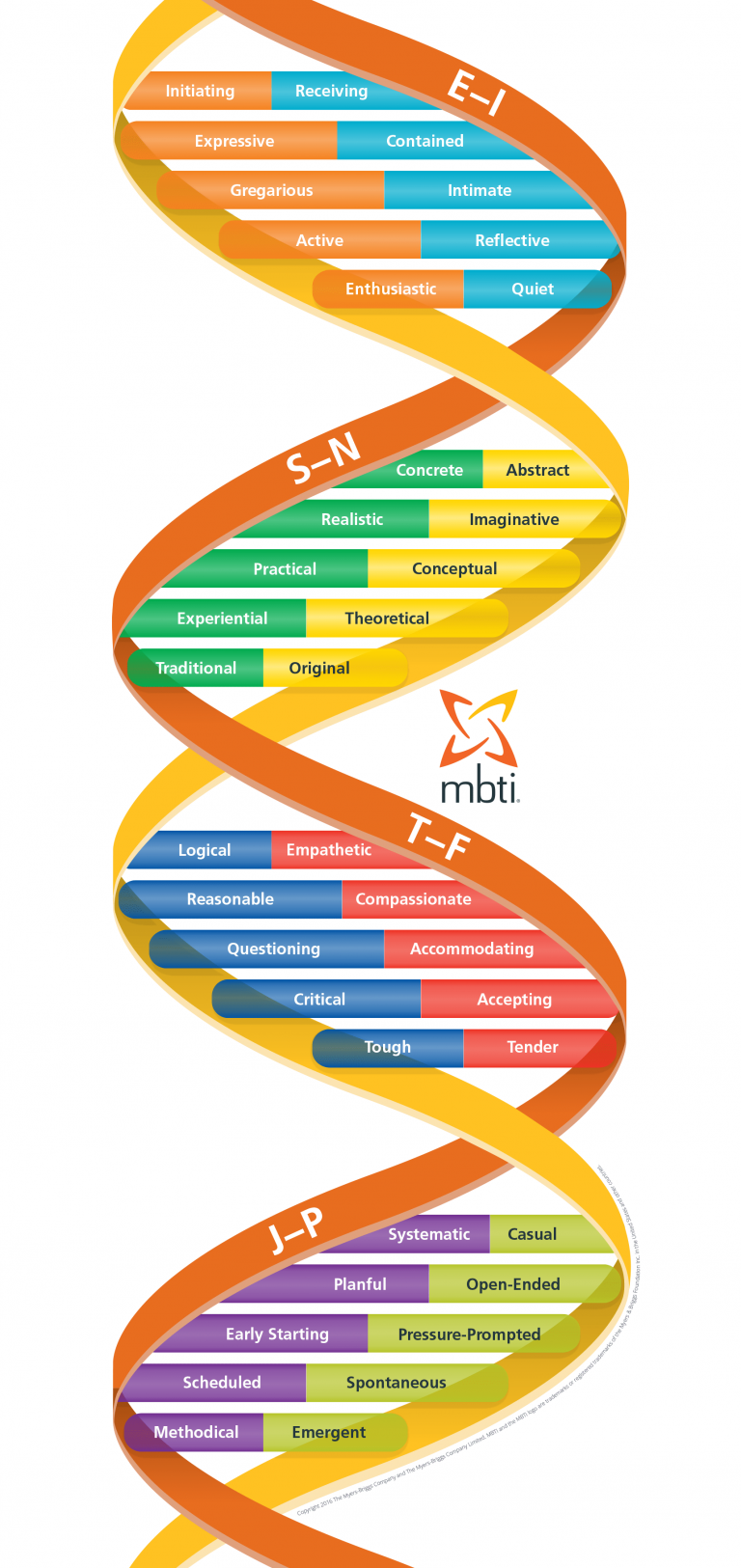
MBTI Step II is a Myers-Briggs questionnaire that delves deeper into the facets of each MBTI Step I type preference. It can help you understand the DNA of an individual's personality, revealing what makes them different from others of the same Step I type, and similar to those with a different MBTI type. The result is a highly personalised profile and a development plan perfect for coaching, development, and building cohesive teams.
By using MBTI Step I insights as a starting point, Step II explores them in greater detail.
It breaks down each of the preference pairs (E-I, S-N, T-F, and J-P) to reveal results across five supplementary personality facets for each. It highlights how these fit into the overall Step I type and where inconsistencies lie that may explain interpersonal challenges. Step II has the power to help people see in great detail where their points of compatibility and friction lie, providing a compelling and resonant framework for teams and individuals at all levels.
The MBTI Step II results help to define the variations within the 16 profiles, whilst also providing guidance for individuals who are having difficulty identifying their best-fit type.
MBTI Step II:
This is a model that allows the individual to understand the full spectrum of their personality functioning, as well as their flexibility and agility skills and how these enable them to function effectively. It results from the combination of Carl Jung's work on psychological types with the contributions of Roger Pearman, showing how the individual interacts with the external and internal worlds, and how they gather information and make decisions.
Pearman™ draws knowledge from the roots of personality type theory and adds new insights into the way people operate in the 21st century. It is a powerful tool that allows for the analysis of current functioning, gaining an understanding of how behavioural patterns are influencing the way the individual works, and increasing flexibility.
The model introduces several innovations:
More Personality: Explores behaviours that are natural (what is most comfortable) and those that are most frequently demonstrated. It provides even more insight by assessing the individual's flexibility, agility, and resilience.
More Flexibility: Integrates personality and psychological flexibility, which is fundamental to professional success, leadership, academic achievement, relationships, and conflict resolution. The Pearman FlexIndex therefore measures how an individual is able to leverage their psychological resources to operate at their maximum capacity. More specifically, it looks at skills in the following areas:
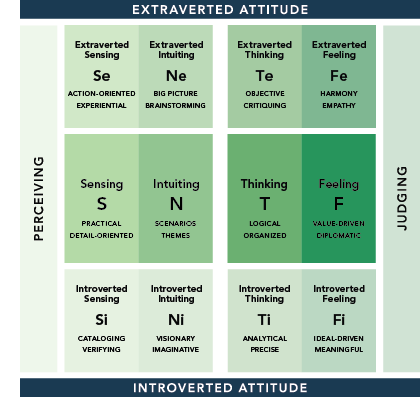
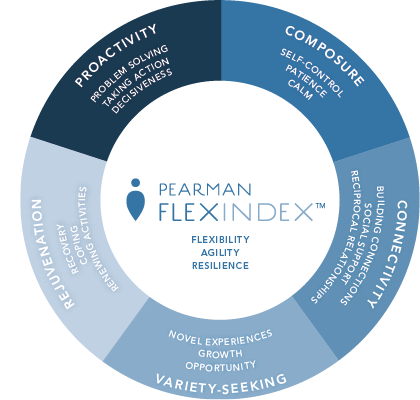
More Freedom: represents personality along a continuum, meaning it is not necessary to choose one personality type over another.
"Studies show that the single greatest derailment factor in an individual's career relates to their ability to be flexible within their role and in changing environments (...). The Pearman FlexIndex provides a direct line to the types of strategies the individual can learn to use in order to boost their flexibility.”
(Roger Pearman)
Everything DiSC is a learning and development experience that measures an individual's preferences and tendencies based on the DiSC® model. This simple yet powerful model describes four basic styles: D, i, S, and C, and serves as the foundation for the Everything DiSC Application Suite. Participants receive personalised insights that deepen their understanding of themselves and others, making workplace interactions more enjoyable and effective. The result is a more collaborative workforce that can drive significant cultural improvement.
Unlock engagement, inspire collaboration, and ignite cultural transformation with Everything DiSC®
Everything DiSC® connects people to deliver "A-ha!" moments that transform workplaces into collaborative and thriving cultures.
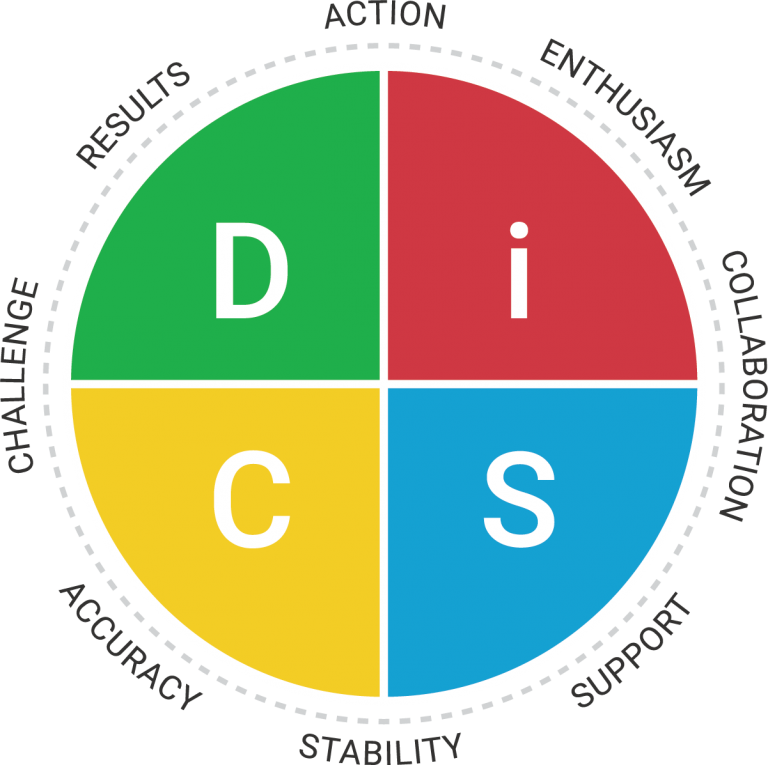
Everything DiSC® delivers learning experiences that have an immediate and lasting impact on individual performance and organisational cultures.
Backed by over 40 years of research, each Everything DiSC personality assessment combines adaptive testing and sophisticated algorithms to deliver precise insights for every participant.
Individuals gain insights into their own preferences and tendencies, learn more about how to relate to others, and receive actionable strategies to help them improve their interactions and, ultimately, their performance.
The profile comes to life in a classroom experience that engages through impactful videos and activities, which can be tailored to meet specific needs. A suite of follow-up resources makes lasting behaviour change possible, keeping Everything DiSC active in the workplace.
The DiSC® model serves as the foundation for the Everything DiSC® Application Suite. Whether improving workplace relationships, strengthening management skills, elevating leadership impact, or navigating conflict, participants receive personalised insights that deepen their understanding of themselves and others.